
Every parent’s foremost concern is keeping their baby safe. During those first few months, it may seem like your little one is perfectly content staying wherever you put them. But before you know it, that tiny baby is rolling, crawling, pulling up on furniture and reaching for absolutely everything!
As babies become more mobile and curious, the number of potential hazards around the home increases, too. Things adults barely notice—an electrical outlet, a dangling cord or a bottle of cleaner under the sink—can suddenly become fascinating to a little explorer.
That’s why baby-proofing your home is so important.
The good news is that you don’t have to tackle everything at once. Start before your baby becomes mobile, work your way through your home one room at a time and continue to reassess as your child develops new skills.
Here is a step-by-step guide to creating a safer home for your growing baby.
1. Secure Furniture and Heavy Objects
Babies and toddlers love to pull themselves up—and once they discover climbing, furniture can quickly become part of the adventure.
Bookcases, dressers, televisions, shelving units and other heavy furniture should be properly secured to prevent tip-over accidents.
The U.S. Consumer Product Safety Commission (CPSC) recommends anchoring furniture and televisions to the wall and following manufacturers’ instructions when installing anti-tip devices. (U.S. Consumer Product Safety Commission)
Learn more about preventing furniture and TV tip-overs from the CPSC
Take a look around your home from a toddler’s perspective. Is there a toy sitting on top of a dresser that might tempt your child to climb the drawers? Is a television sitting unsecured on a piece of furniture? Could a bookshelf topple if a child pulled on it?
Securing these items now can prevent a serious accident later.
2. Cover Electrical Outlets
Babies explore their surroundings with their hands—and often their mouths. Unfortunately, an electrical outlet happens to be right at eye level for a crawling baby.
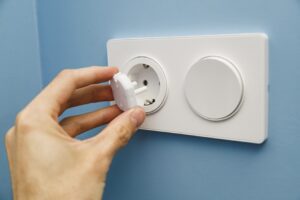
Install child-resistant outlet covers or safety plugs in unused outlets throughout your home. Make sure the covers you choose cannot easily be removed by a child and become a choking hazard themselves.
The American Academy of Pediatrics recommends placing non-choking-hazard safety plugs in unused electrical outlets to help protect young children from electrical injury. (HealthyChildren.org)
Also look for electrical cords within reach. Chargers, extension cords, lamps and appliance cords can become pulling or strangulation hazards. Keep cords tucked away whenever possible.
3. Install Baby Gates
Stairs can become particularly dangerous once a baby starts crawling or walking.
Install sturdy safety gates where needed, especially at the top and bottom of stairways. Gates may also be useful for keeping babies away from kitchens, fireplaces, pet areas, home offices or other rooms that haven’t been fully childproofed.
The American Academy of Pediatrics recommends safety gates at both the top and bottom of stairs when children are learning to crawl and walk. (HealthyChildren.org)
Remember that babies develop quickly. A child who couldn’t climb yesterday may suddenly surprise you today!
4. Lock Away Cleaning Supplies and Medications
Many everyday household products can be dangerous if swallowed or spilled.
Cleaning supplies, laundry detergent, dishwasher pods, medications, vitamins, cosmetics and other potentially harmful products should be kept out of sight and reach—preferably inside a locked cabinet.
The American Academy of Pediatrics recommends storing potentially poisonous products in cabinets with locks or safety latches. This is especially important because young children naturally explore by putting things in their mouths. (HealthyChildren.org)
Read the American Academy of Pediatrics guide to childproofing your home for poisons
Don’t assume a child-resistant package means a product is childproof. Think of child-resistant packaging as an extra layer of protection—not a substitute for safe storage.
5. Secure Window Blinds and Windows
Window coverings are an often-overlooked area of baby-proofing.
Cords from blinds, shades and other window coverings can pose a strangulation hazard. The CPSC says cordless window coverings are the safest option in homes where young children are present. (U.S. Consumer Product Safety Commission)
Learn more about window-covering safety from the CPSC
Keep cribs, beds, toys and climbable furniture away from windows and window-covering cords.
Windows themselves deserve attention, too. Screens are designed to keep insects out; they are not designed to prevent children from falling. The CPSC recommends appropriate window guards or safety devices where needed while making sure there is still an accessible emergency escape route. (U.S. Consumer Product Safety Commission)
6. Cover Sharp Edges and Corners
Once babies start pulling up and learning to walk, there will be plenty of tumbles.
Take a look at coffee tables, fireplace hearths, countertops, benches and other furniture with hard or sharp corners. Corner guards and edge protectors can provide additional cushioning.
You may also decide that some furniture simply needs to be moved temporarily.
Remember, this stage doesn’t last forever. Moving your favorite coffee table into another room for a year or two may be worth it if it gives your little one a safer place to learn to crawl, stand and walk.
7. Regularly Check Toys for Safety
Toys deserve regular safety inspections, especially if they are frequently dropped, chewed or passed down from older siblings.
Check toys for broken pieces, loose components and small parts that could become choking hazards. Follow manufacturer age recommendations, and pay particular attention to toys or household items containing button or coin batteries.
Button batteries can cause severe injury if swallowed. If you suspect your child has swallowed one, seek emergency medical care immediately. (HealthyChildren.org)
Learn more about protecting children from button and coin batteries
And remember that batteries aren’t found only in toys. Remote controls, key fobs, watches, hearing aids, greeting cards and other everyday objects may contain them.
8. Don’t Forget the Kitchen and Bathroom
Two of the busiest rooms in your home can also contain some of the biggest hazards.
In the kitchen, keep knives, matches, cleaning products and breakable objects secured. Keep hot drinks and foods away from the edges of counters and tables. Make sure appliance cords aren’t hanging within reach.
In the bathroom, keep medications, cosmetics, razors and cleaning supplies locked away. Never leave a baby or toddler unattended around water—not even for a moment.
The goal isn’t to eliminate every possible bump or bruise. Children learn through exploration. Baby-proofing is about reducing preventable risks while giving your child an appropriate space to explore and grow.
9. Get Down on Baby’s Level
Here’s one of the simplest baby-proofing tricks: get down on your hands and knees and crawl around your house.
Really!
You’ll see your home from an entirely different perspective.
What can you reach? What can you pull? Is there a cord hanging behind the sofa? A tiny object underneath the coffee table? A plant within grabbing distance? A cabinet that opens easily? A heavy object that could fall?
Repeat this little inspection periodically because your baby’s abilities will change quickly.
Baby-Proofing Is an Ongoing Process
Baby-proofing isn’t something you do once and check off your parenting list.
Your home may be perfectly safe for a six-month-old who has just started crawling but present completely different challenges for a 12-month-old who is walking and climbing.
As your baby reaches new developmental milestones, reassess your home.
Ask yourself: What can my child reach now that they couldn’t reach last month? What can they open? What can they climb? What new skill have they learned?
The CPSC offers a helpful collection of childproofing recommendations covering everything from furniture tip-overs and window coverings to poison prevention and other household hazards. (U.S. Consumer Product Safety Commission)
Explore the CPSC’s child and home safety resources
A Safer Home for Your Little Explorer
Watching your baby become curious about the world is one of the joys of parenthood. Suddenly, every cabinet needs to be opened, every object needs to be investigated and every corner of the house seems to hold a new adventure.
A little preparation can give your baby more freedom to explore while giving you greater peace of mind.
Secure the furniture. Cover the outlets. Lock the cabinets. Check the toys. Look for cords and climbing hazards. Then keep checking as your child grows.
Most importantly, remember that even the best baby-proofing products aren’t a replacement for attentive adult supervision.
You can’t remove every risk from childhood—and you certainly can’t prevent every bump along the way. But by creating a safer environment and staying one step ahead of your increasingly mobile little explorer, you can help make home a wonderful place for your baby to safely discover the world.